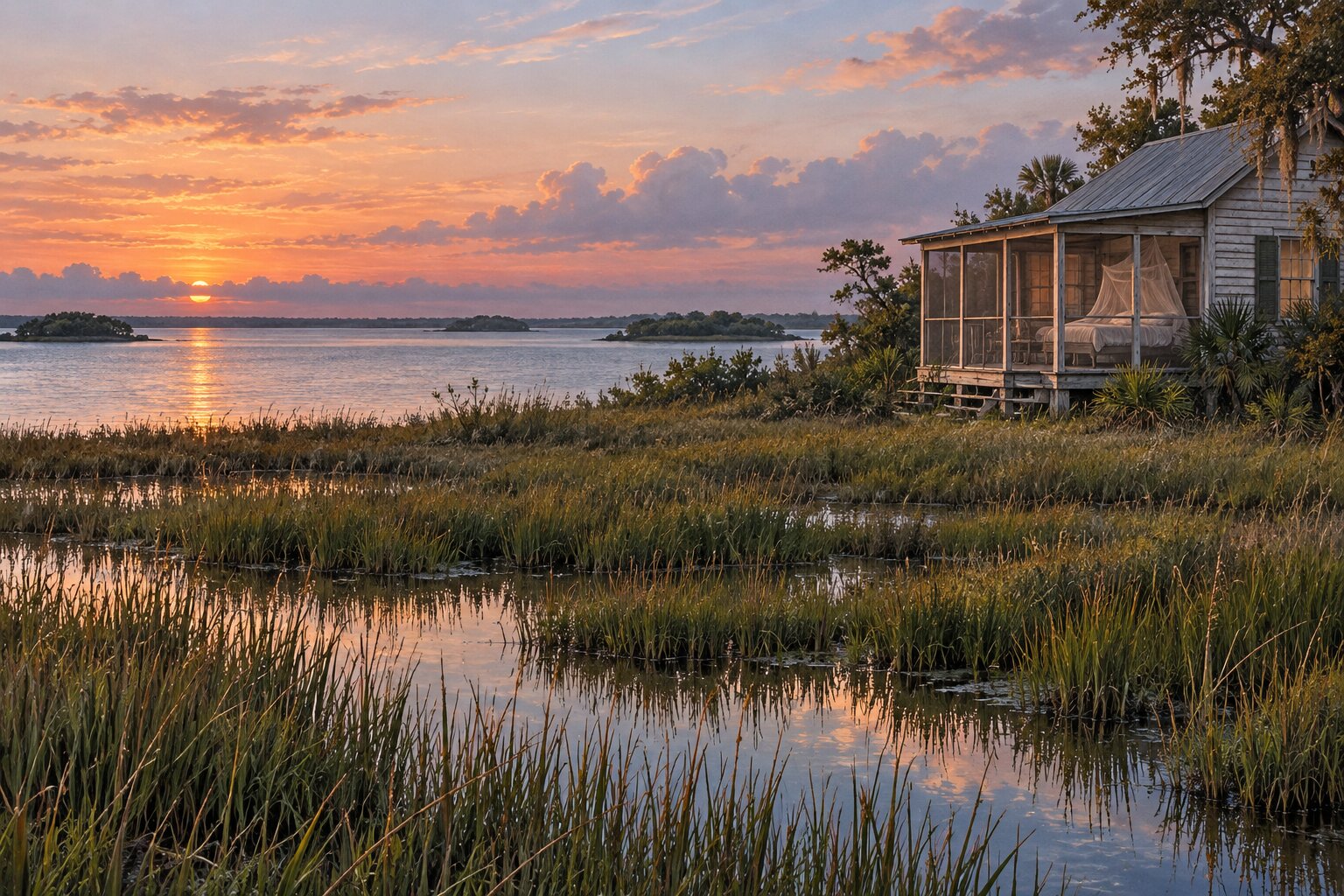
Mosquito season on the Indian River was part of the year long before the impoundments that were later built to fight it. The two Fort Pierce weeklies of 1905 to 1911 never ran a story about mosquitoes as such. They printed something more useful: the weekly columns sent in from the river settlements, and those columns kept a running record of when the mosquitoes came, when they were at their worst, what drove them off and when they left. This page reads that record for what it says about the marsh, the water and the weather.
A mosquito season from June to October
In October 1905 a correspondent in the Tribune’s north county news hoped the mosquitoes would give everyone a rest until June, when, the writer joked, the settlement would be ready to welcome them home again. June was about right. The complaints that followed in the papers ran through the summer: the Waveland column called the mosquitoes very bad that summer of 1905, the Eden correspondent wrote in July 1907 that they had never been worse, and in July 1909 the Sebastian column in the Fort Pierce News reported them holding full sway.
The end came with the first cool weather. In the last week of September 1905 the Eden column welcomed a blessed change: much cooler, and the mosquitoes gone, the writer hoped for good. The next week the Waveland column said the same, and by mid-October the Quay column reported them gone too.
One caller to the Tribune office that October, a man from the settlement of St. Lucie north of Fort Pierce, reported that the mosquitoes had not all left the low lands along the ocean, even as the settlement columns were calling them gone.
Rain, wind and dry weather
The correspondents knew what brought the mosquitoes and what sent them away, and they wrote it down plainly. Rain brought them. In June 1906 the Vero column reported plenty of rain and expected more mosquitoes to follow, and the Wabasso column on the same page told of a road nearly all under water with mosquitoes swarming over it.
Dry weather and wind sent them off. In September 1905 one settlement column reported southeast breezes that had driven the mosquitoes to cover, and said life was worth living again. In August 1909 the Vero column in the News was thankful they had gone again, because dry weather and hot sunshine did not suit their breeding.
The mosquito season did not always run in one clean arc. Two weeks after that Vero report, the Wabasso column in the News had the mosquitoes visiting again, with hopes they would not stay long. Three weeks after that, it called them very bad again.
Living with them
River people took the mosquitoes with humor. In July 1907, with the pineapple crop finished, the Eden correspondent wrote that style no longer mattered and everyone dressed for the mosquitoes alone, with bars over head and coat, a bush carried in hand, and citronella for perfume. The same column offered mock recipes for mosquito pie. In July 1909 a young woman home in Sebastian to visit her parents told the column that the Narrows was the birthplace of the mosquito.
They also arranged their lives around them. In May 1909 the Wabasso column reported that Sunday evening preaching had been dropped because of the mosquitoes, and that services would be held in the morning after Sunday school from then on. That same month, as our sister site’s page on Ankona tells, the Ankona school’s closing exercises on the evening of Friday, May 21 drew a large crowd in spite of the heat and the mosquitoes.
And they bought netting. In the spring of 1909 the Fort Pierce merchant P. P. Cobb advertised in both papers, telling readers to get ready for the bugs with mosquito bars, canopies and window and door screening. In the summer of 1910 a store’s summer advertisement in both papers offered mosquito canopies for the head and face as well as for double and single beds, and the Tribune’s version announced a large new shipment.
The mosquitoes stopped work on the river, too. In August 1905 the Tribune’s state news column reported that the federal engineering department’s new dredge and snagboat Florida had been taken out of commission for thirty days, because the mosquitoes were too numerous on the Indian River.
What the papers knew about mosquitoes
The idea of fighting mosquitoes at their source reached Fort Pierce readers only from far away. In August 1907 the Tribune reprinted an item about a small Australian fish that fed on mosquito larvae in shallow water, thousands of which the Italian government had imported.
In June 1911, at the start of another mosquito season, it carried two more: advice from the federal Department of Agriculture on keeping mosquitoes off a sleeper, with oil of citronella and spirits of camphor among the remedies, and a news item on the latest methods against disease carried by mosquitoes, which were oil poured on pools that could not be drained and a small fish from Barbados that lived on the larvae.
None of the local items we found describe an organized effort against mosquitoes along the river. The defenses were netting, screens and the weather.
The marsh after 1911
The two Fort Pierce papers end in December 1911, so this record ends there too. The mosquito impoundments built later, which altered the tidal flow across large areas of the lagoon’s marshes, belong to a later chapter; our mangrove forests page describes them, and the water quality crisis covers what the lagoon faces today. For the same river in the same years, see early drainage canals at Fort Pierce and Indian River oysters, 1905 to 1911.
Frequently asked questions
When was mosquito season on the Indian River in the early 1900s?
Roughly June to October. A north-county correspondent in 1905 joked about welcoming the mosquitoes home again in June, July and August brought the worst complaints, and cooler weather in late September and October brought reports that they had gone. It was not one clean arc: in 1909 the Vero column said they were gone in August, and by September the Wabasso column had them back.
What did people use against mosquitoes in 1905 to 1911?
Netting and screens, mostly. Stores advertised in the Fort Pierce papers: mosquito bars, canopies for beds and for the head and face, and window and door screening. The Eden correspondent joked about wearing bars over head and coat and citronella as perfume. Otherwise people waited for wind, dry weather or the first cool spell.
Was there mosquito control on the Treasure Coast then?
Not in anything we found in the two Fort Pierce papers through 1911. Methods such as oiling standing pools and stocking fish that eat mosquito larvae appear only in reprinted national and foreign news items.
Sources
This page is drawn from the two Fort Pierce weeklies of the time, via Library of Congress, Chronicling America. From the St. Lucie County Tribune: August 18, 1905 (page 2), September 8, 1905 (page 5), September 29, 1905 (page 5), October 6, 1905 (page 5), October 13, 1905 (page 3), June 22, 1906 (page 8), July 12, 1907 (page 4), August 16, 1907 (page 4), April 23, 1909 (page 4), May 28, 1909 (page 6), June 4, 1909 (page 4), June 17, 1910 (page 4), June 2, 1911 (page 2) and June 30, 1911 (page 8).
From the Fort Pierce News: March 26, 1909 (page 5), July 16, 1909 (page 1), July 23, 1909 (page 5), August 20, 1909 (page 4), September 3, 1909 (page 4), September 24, 1909 (page 8) and May 27, 1910 (page 4). The Fort Pierce News survives from November 1906, so the 1905 and 1906 items rest on the Tribune alone. The illustration was made for this page.