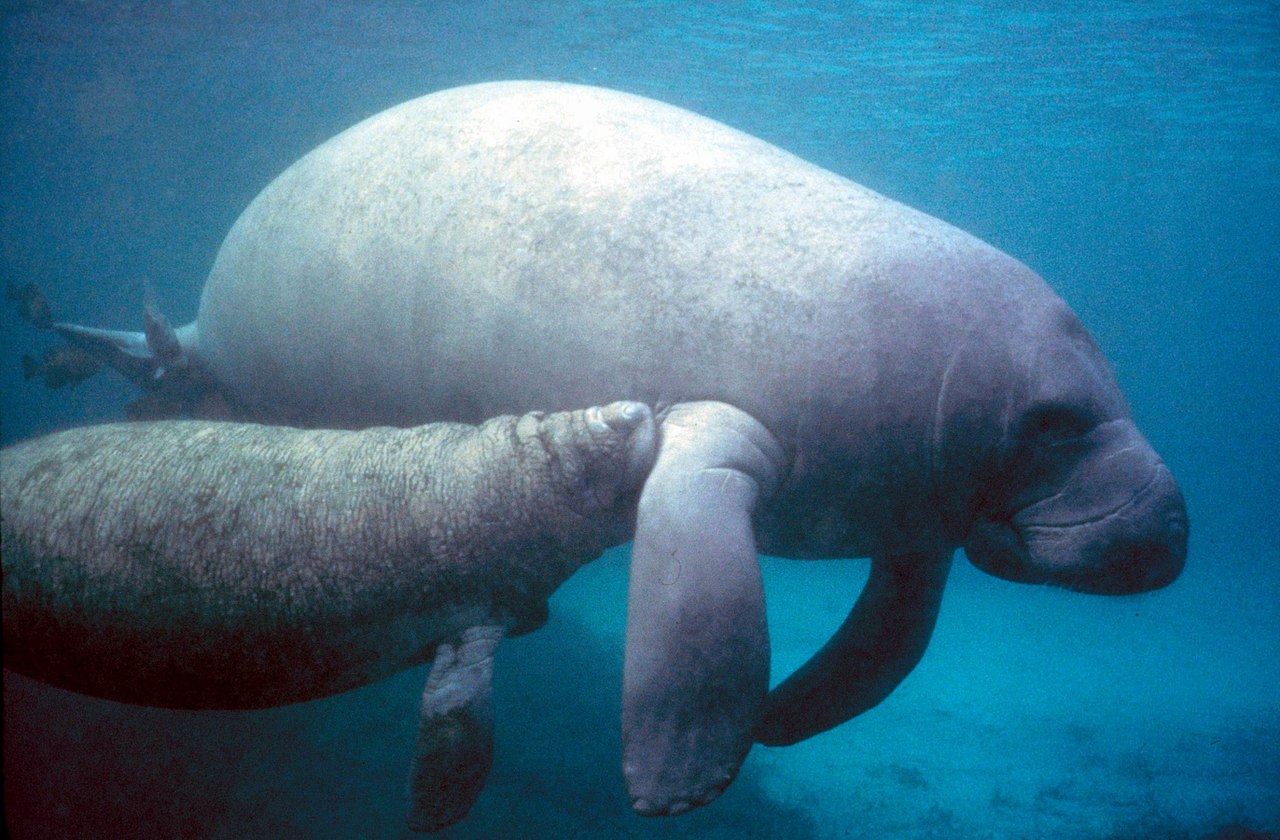
If you have paddled the Indian River Lagoon on a still morning, you have probably heard a manatee before you saw one: a soft exhale, then the swirl of a broad tail settling back into the seagrass. Manatees have grazed this shallow estuary for thousands of years, and the story of manatees in the Indian River Lagoon is really the story of the lagoon itself. Its warm, sheltered water and its seagrass beds are what draw them here, and the decline of that seagrass is what now puts them at risk.
This guide stays close to home. Rather than a general profile of the species, it looks at what the Treasure Coast's lagoon provides for the Florida manatee (Trichechus manatus latirostris), why the animals gather where they do through the seasons, and what has gone wrong in the water they depend on.
Why the Indian River Lagoon is manatee country
The Indian River Lagoon runs 156 miles down Florida's east coast, from Volusia County through Brevard, Indian River, St. Lucie, and Martin counties. It is a bar-built estuary: a shallow ribbon of brackish water, often only three to five feet deep, held behind a chain of barrier islands. That geometry is exactly what a manatee needs. The water is warm and calm, the bottom is close enough to graze without effort, and the barrier islands blunt the ocean swell and current that manatees generally avoid.
Manatees use the lagoon for everything: feeding, resting, mating, and traveling between the ocean inlets and the freshwater creeks that feed the estuary. Aerial surveys by the Florida Fish and Wildlife Conservation Commission have counted hundreds of manatees moving through the lagoon system in both winter and summer. For the animals that live here, the lagoon is not one habitat among many. It is the whole world.
Seagrass: the food that holds the lagoon together
A manatee spends six to eight hours a day eating and takes in roughly 4 to 9 percent of its body weight in plants. For a 1,000-pound animal, that is 40 to 90 pounds of vegetation a day, and in the Indian River Lagoon most of it is seagrass: shoal grass (Halodule wrightii), manatee grass (Syringodium filiforme), and turtle grass (Thalassia testudinum).
Manatees are built for this diet. A split, prehensile upper lip grips and tears the blades, and their molars are replaced from the back of the jaw throughout life, a conveyor-belt arrangement that shrugs off the grit and silica in lagoon seagrass. When seagrass is thin, they will fall back on algae and floating plants like water hyacinth, but those are poor substitutes. A manatee forced onto them for long loses condition. You can read more about these underwater meadows in our guide to the lagoon's seagrass beds.
Warm-water refuges on the Treasure Coast
Manatees cannot take the cold. When water drops below about 68 degrees Fahrenheit, they are vulnerable to cold stress syndrome, which suppresses the immune system and can lead to skin lesions, pneumonia, and death. That single fact shapes where you find them all winter.
From roughly November through March, manatees leave the open flats and crowd into whatever water stays warm: deep residential and navigation canals that hold heat, the mouths of spring-fed tributaries, and industrial warm-water outflows. On cold mornings they stack up by the dozens in these pockets, barely moving, waiting for the flats to warm again. As spring returns and the water climbs back toward the low 70s, they disperse across the lagoon to graze. A few range hundreds of miles up and down the coast in summer, with individuals recorded as far north as Virginia, though most stay close to the estuaries they know.
The 2021 seagrass die-off and manatee starvation
Beginning in late 2020, manatees in the northern Indian River Lagoon started dying at a rate no one had seen before. By the end of 2021, more than 1,100 manatees had died statewide, the highest annual toll on record and roughly twice the five-year average. Most of them starved.
The cause was not a mystery. Years of nutrient pollution from stormwater, septic systems, agriculture, and wastewater had fed persistent algal blooms that clouded the water and blocked the sunlight seagrass needs to grow. Without light, the meadows died. By some estimates the lagoon lost more than half of its seagrass between 2011 and 2021, and the manatees that had grazed those beds for generations were left with nothing to eat. Emaciated animals turned up throughout the system, and rescuers from groups like the Save the Manatee Club worked to pull starving manatees out for rehabilitation.
In the winter of 2021 to 2022, state and federal agencies did something they had never done before: they ran a supplemental feeding station in Brevard County, hand-feeding romaine lettuce to manatees at a warm-water refuge. It kept animals alive, but biologists were blunt that it was triage, not a fix. The federal government designated the event an Unusual Mortality Event, and it laid the connection bare. In this lagoon, water quality, seagrass, and manatees are one chain, and when the first link breaks the last one starves. Our guide to the lagoon's water quality crisis traces how that pollution built up.
Boat-speed zones and manatee protection in local waters
Watercraft strikes have long been a leading documented cause of manatee deaths. Manatees are slow and often rest or feed just under the surface in the same shallow channels boaters use, and the pale parallel propeller scars on so many living animals are common enough that researchers use them to tell individuals apart.
To reduce collisions, the Florida Fish and Wildlife Conservation Commission designates manatee protection zones through the lagoon, including slow-speed and idle-speed areas in channels, basins, and near-shore water where manatees gather. The zones are marked with regulatory signs, some are seasonal and tighten in winter, and they are enforceable by FWC officers. On top of the speed rules, the Endangered Species Act and the Marine Mammal Protection Act make it illegal to chase, corner, feed, or otherwise harass a wild manatee, including separating a cow from her calf.
Where and when to see manatees in the lagoon
The Treasure Coast is one of the better places in Florida to watch manatees, and you do not need a boat to do it. In the cooler months, look from waterfront parks, fishing piers, boardwalks, and bridges over the lagoon in St. Lucie and Martin counties, especially near canal mouths and warm outflows where the animals concentrate on cold days. Calm, clear mornings are best. Watch for the round back breaking the surface, the swirl of a "footprint" on the water, or the snout tipping up for a breath.
Watching manatees well means keeping your distance:
- Stay back at least 50 feet. Use binoculars or a zoom lens instead of closing in.
- Never feed or water a manatee. Feeding wild manatees is illegal, and offering fresh water from a dock hose teaches them to linger around docks and boats, which gets them hurt.
- Paddle quietly. If you kayak or paddleboard, go slow and steer wide of resting or nursing animals.
- Do not touch. Even a gentle hand can count as harassment under federal law. If a manatee comes to you, hold still and let it choose to leave.
- Report animals in trouble. Call the FWC Wildlife Alert Hotline at 1-888-404-FWCC (3922) if you see a manatee that looks injured, sick, orphaned, or dead.
The lagoon that makes it possible
A manatee's life here rests on the shape of the estuary: the barrier islands that trap the warm shallow water, the sandy bottom that grows seagrass, and the inlets that keep the lagoon brackish rather than fully marine. Our partner site Florida Geology explains how the barrier islands and the lagoon basin formed, and why a bar-built estuary like this one ends up so shallow, so warm, and so productive. It is worth reading alongside this page: the geology is the reason the manatees are here at all.
The future of manatees in the Indian River Lagoon
The fate of the lagoon's manatees is tied directly to the health of the lagoon. Restoring seagrass, which means sustained, real reductions in the nutrient pollution that killed it, is the single most important thing anyone can do for them. Local and regional agencies, including the St. Johns River Water Management District and the Indian River Lagoon National Estuary Program, have put money into wastewater upgrades, septic-to-sewer conversions, and stormwater treatment aimed at cutting those nutrients. You can follow that work in our coverage of lagoon restoration.
These efforts are necessary and slow. Seagrass recovers over years, not seasons, even when the water improves. Until it does, the manatees of the Indian River Lagoon remain caught between poor water, thin forage, boat traffic, and a warming climate. Their survival comes down to whether the people who share the lagoon are willing to do the long, unglamorous work of cleaning it up.
Frequently asked questions
Where can I see manatees in the Indian River Lagoon?
Look from waterfront parks, fishing piers, boardwalks, and bridges along the lagoon in St. Lucie and Martin counties, especially near canal mouths and warm-water outflows. The cooler months, November through March, are best, because manatees gather in warm, sheltered water on cold days. Always watch from a distance and never approach, feed, or touch a wild manatee.
When is the best time to see manatees on the Treasure Coast?
Winter. When lagoon water drops below about 68 degrees Fahrenheit, manatees crowd into the warmest pockets they can find, which makes them far easier to spot from shore. Calm, clear mornings on a cold day are your best odds. In summer the animals spread out across the flats to graze and are harder to find in any one place.
Why did manatees starve in the Indian River Lagoon?
Decades of nutrient pollution fed algal blooms that clouded the water and blocked sunlight, killing the seagrass manatees eat. The lagoon lost more than half of its seagrass between 2011 and 2021, and with their main food gone, manatees in the northern lagoon starved. More than 1,100 manatees died statewide in 2021, most of them from starvation linked to that seagrass collapse.
Are there manatees in the lagoon year-round?
Yes. Manatees live in the Indian River Lagoon throughout the year, but their distribution shifts with the seasons. In winter they concentrate at warm-water refuges; in the warmer months they disperse widely across the lagoon to feed on seagrass, and some travel long distances along the coast before returning.
What should I do if I see an injured manatee?
Report injured, sick, orphaned, or dead manatees to the FWC Wildlife Alert Hotline at 1-888-404-FWCC (3922). You can also report sightings through the FWC's online tool. Do not try to move or assist the animal yourself.
Keep exploring the systems that keep manatees alive here: the Indian River Lagoon itself, the seagrass meadows they graze, and the conservation efforts working to bring the water back.