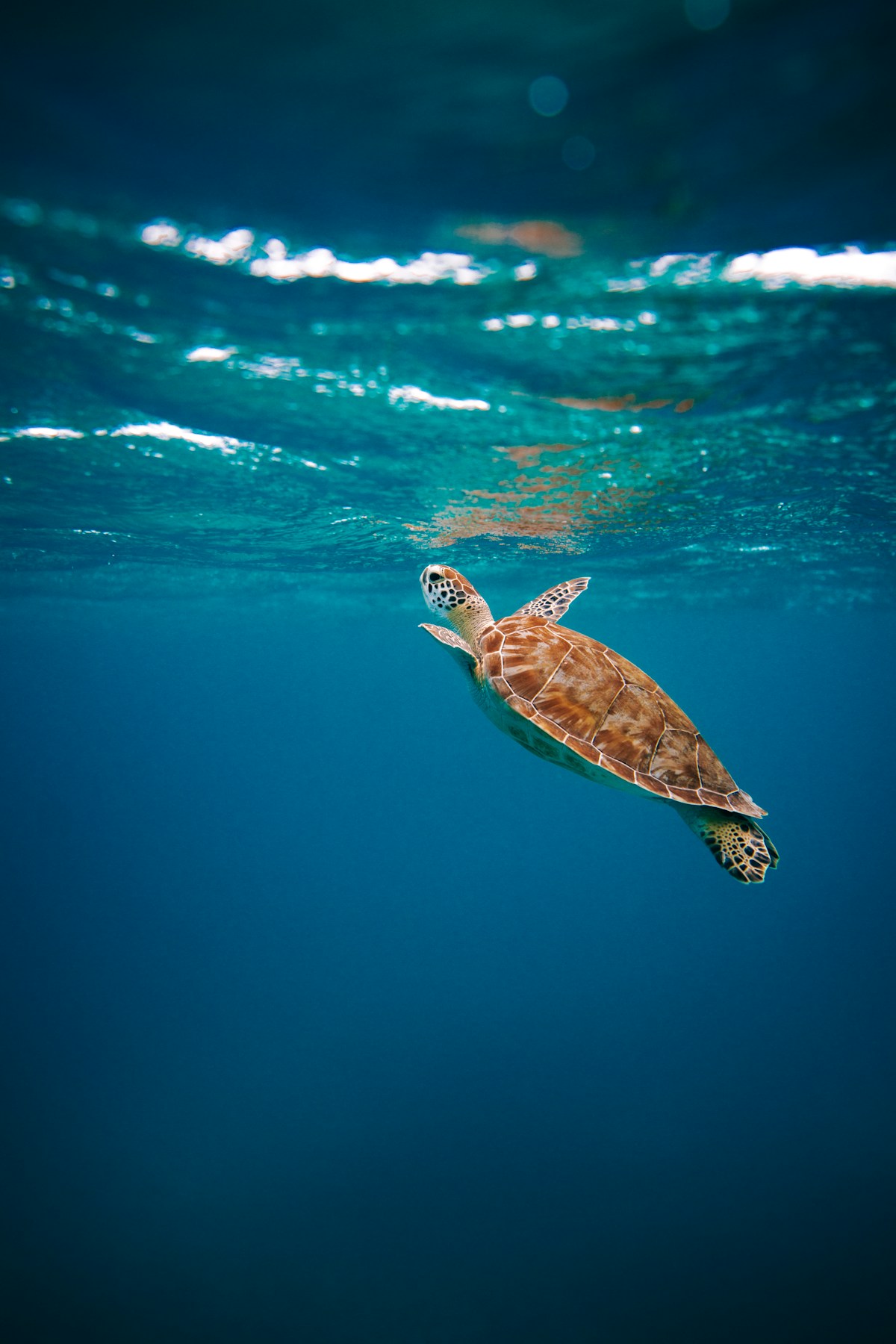
Every spring, under the cover of darkness, ancient instinct draws sea turtles from the open Atlantic to the sandy beaches of Florida's Treasure Coast. The barrier island shores of St. Lucie and Martin counties host some of the densest sea turtle nesting activity in the Western Hemisphere, with thousands of nests laid each season by three distinct species. Sea turtle nesting on the Treasure Coast is both a natural spectacle and a conservation story that connects this stretch of coastline to ocean ecosystems spanning the globe.
A Global Nesting Hotspot
Florida's Atlantic coast accounts for approximately 90 percent of all sea turtle nesting in the continental United States, and the Treasure Coast sits near the heart of that activity. The beaches from Jupiter Island in Martin County northward through Hutchinson Island in St. Lucie County are consistently among the highest-density nesting areas in the state. In peak years, surveyors on these beaches have documented tens of thousands of nests across the combined coastline.
This concentration of sea turtle nesting on the Treasure Coast is not accidental. The region's wide, gently sloping beaches provide the sandy substrate that nesting females require. The barrier islands that form the coastline create relatively undeveloped stretches of beach habitat — particularly on Hutchinson Island, where portions of the shoreline remain free of the high-rise condominiums and seawalls that have eliminated nesting habitat elsewhere in South Florida. The proximity of the Gulf Stream, which flows northward just offshore, provides warm water and productive foraging grounds for turtles traveling to and from the nesting beaches.
Three Species, One Coastline
Three species of sea turtles regularly nest on the beaches of the Treasure Coast: the loggerhead, the green turtle, and the leatherback. Each species has distinct nesting behaviors, physical characteristics, and conservation challenges.
Loggerhead Sea Turtle (Caretta caretta)
The loggerhead is by far the most common nesting species on the Treasure Coast and throughout Florida. Named for its disproportionately large head, which houses powerful jaw muscles capable of crushing hard-shelled prey like conchs and horseshoe crabs, the loggerhead is a medium-to-large sea turtle. Adult females typically weigh between 200 and 350 pounds and measure about three feet in shell length.
Loggerheads account for the vast majority of sea turtle nesting on the Treasure Coast, with thousands of nests recorded each season along the beaches of St. Lucie and Martin counties. The nesting season for loggerheads runs from late April through September, with peak activity in June and July. A single female loggerhead may lay three to five nests per season, with each clutch containing roughly 100 to 120 eggs. After nesting, females typically return to their foraging grounds and do not nest again for two to three years.
The loggerhead population nesting in the northwestern Atlantic is designated as a distinct population segment and is listed as threatened under the Endangered Species Act.
Green Sea Turtle (Chelonia mydas)
Green turtles are the second most common nesting species on the Treasure Coast. They are named not for their external coloring — which is typically brown or olive — but for the green color of their body fat, a result of their herbivorous diet. Adult green turtles are among the largest of the hard-shelled sea turtles, with nesting females weighing 250 to 400 pounds.
Unlike loggerheads, which are carnivorous, adult green turtles feed almost exclusively on seagrasses and algae. This dietary connection links green turtles directly to the health of nearshore habitats, including the seagrass beds of the Indian River Lagoon and the reef systems offshore of the Treasure Coast.
Green turtle nesting on the Treasure Coast has increased dramatically over the past two decades. The nesting season runs from June through September, slightly later than loggerheads. Green turtles nest in a biennial pattern, with even-numbered years historically producing significantly more nests than odd-numbered years in Florida, though this pattern has become less distinct as the population has grown. The North Atlantic population of green turtles is listed as threatened under the Endangered Species Act.
Leatherback Sea Turtle (Dermochelys coriacea)
The leatherback is the largest of all living sea turtles and one of the most remarkable animals on Earth. Adult leatherbacks can exceed six feet in shell length and weigh more than 1,000 pounds — some individuals have been recorded at nearly 2,000 pounds. Unlike all other sea turtles, leatherbacks lack a hard, bony shell. Instead, their carapace is covered by a thick, leathery skin reinforced by thousands of tiny bone plates called osteoderms.
Leatherbacks are the earliest nesters on the Treasure Coast. Their season begins in March, weeks before loggerheads arrive, and extends into July. Leatherback nesting on the Treasure Coast occurs in much smaller numbers than loggerhead or green turtle nesting — typically dozens to low hundreds of nests per season across the region — but every nest is significant for a species whose global population has declined sharply over the past several decades. The leatherback is listed as endangered under the Endangered Species Act.
These deep-diving, open-ocean turtles feed primarily on jellyfish and other gelatinous organisms. They are capable of diving to depths exceeding 3,000 feet and can regulate their body temperature to a degree unusual among reptiles, allowing them to forage in cold northern waters that would be lethal to other sea turtle species.
The Nesting Process
Sea turtle nesting on the Treasure Coast follows a sequence of behaviors that has remained essentially unchanged for more than 100 million years. Nesting almost always occurs at night, typically between 9 p.m. and 5 a.m., when temperatures are cooler and the risk of predation is lower.
A nesting female emerges from the surf and crawls up the beach, propelling her heavy body with her front flippers. She selects a nest site above the high-tide line, often at the base of the dune vegetation. Using her rear flippers with remarkable dexterity, she excavates a flask-shaped egg chamber approximately 18 to 22 inches deep. The digging process takes 20 to 30 minutes.
Once the chamber is complete, the female begins laying eggs, depositing them in groups of two or three. A typical loggerhead clutch contains 100 to 120 eggs; green turtles lay 110 to 140 eggs per clutch; leatherbacks lay 70 to 90 fertile eggs plus a number of smaller, yolkless spacer eggs. The eggs are roughly the size of ping-pong balls, with soft, pliable shells that resist breakage as they drop into the chamber.
After the last egg is deposited, the female uses her rear flippers to carefully cover the egg chamber with sand, then uses her front flippers to scatter sand over a wider area, disguising the exact location of the nest. The entire process, from emergence to return to the ocean, takes one to two hours. The female provides no further care to the nest or the hatchlings that will emerge from it.
Incubation and Hatchling Emergence
Sea turtle eggs incubate in the warm sand for approximately 45 to 70 days, depending on species and sand temperature. The eggs develop without any parental attention — the heat of the sun-warmed sand provides all the energy needed for embryonic development.
When the hatchlings are fully developed, they use a temporary egg tooth to break through their shells. The hatchlings from a single nest typically emerge together in a coordinated event, usually at night, when sand surface temperatures have cooled. Working collectively, they dig upward through the sand column above the egg chamber — a process that can take several days.
Upon reaching the surface, hatchlings orient toward the brightest horizon, which under natural conditions is the open ocean, where light from the moon and stars reflects off the water. This seaward orientation is critical to survival: hatchlings that move in the wrong direction — toward artificial lights from buildings, streetlights, or parking lots — may never reach the ocean. Light pollution is one of the most significant and well-documented threats to sea turtle hatchlings on developed coastlines, including portions of the Treasure Coast.
Threats to Sea Turtle Nesting on the Treasure Coast
Artificial Lighting
Artificial light visible from the beach is the single most pervasive threat to sea turtle nesting on the Treasure Coast. Bright or poorly shielded lights disorient both nesting females, which may avoid well-lit beaches, and hatchlings, which can become fatally attracted to light sources and wander inland instead of reaching the ocean. St. Lucie and Martin counties both have lighting ordinances that require beachfront properties to use sea-turtle-friendly lighting during nesting season, but compliance varies and enforcement is an ongoing challenge.
Beach Development and Armoring
Seawalls, rock revetments, and other shoreline armoring structures can prevent nesting females from accessing suitable nesting habitat above the high-tide line. Beach nourishment projects — in which sand is pumped from offshore onto eroded beaches — can benefit nesting turtles by restoring habitat, but poorly executed projects that use incompatible sand or create steep escarpments can also impede nesting.
Predation
Raccoons, foxes, and feral hogs are significant nest predators on the Treasure Coast. These animals dig up nests and consume eggs, sometimes destroying entire clutches. Ghost crabs also prey on eggs and small hatchlings. Many sea turtle monitoring programs on the Treasure Coast use wire mesh screens placed over nests to deter mammalian predators while allowing hatchlings to emerge.
Climate Change
Rising temperatures affect sea turtle nesting on the Treasure Coast in multiple ways. Warmer sand temperatures skew hatchling sex ratios toward females, as described above. Sea level rise threatens to inundate low-lying nesting habitat, and increasingly intense tropical storms during hurricane season can wash out nests before eggs have hatched. Changes in ocean temperatures and currents may also affect the distribution and availability of food sources for adult turtles.
Marine Debris and Pollution
Sea turtles at all life stages are vulnerable to ingestion of marine debris, particularly plastic. Leatherbacks, which feed on jellyfish, are especially prone to mistaking plastic bags for prey. Chemical pollution, including oil spills and agricultural runoff, can degrade nearshore habitats and affect the health of foraging turtles. On the Treasure Coast, water quality issues in the Indian River Lagoon and periodic discharges from Lake Okeechobee through the St. Lucie Estuary contribute to degraded nearshore conditions.
Conservation Efforts
Sea turtle nesting on the Treasure Coast is protected by a combination of federal, state, and local regulations. All sea turtles in U.S. waters are protected under both the Endangered Species Act and Florida state law. The FWC Marine Turtle Program coordinates statewide nesting surveys, issues permits for research and monitoring, and enforces protections.
On the Treasure Coast, permitted volunteers and staff from organizations such as the Ecological Associates of Jensen Beach and the Hobe Sound Nature Center conduct daily beach surveys during nesting season. These surveyors walk assigned sections of beach each morning, identifying new nests by the distinctive tracks left by nesting females. Each nest is marked, recorded, and monitored throughout incubation. After hatching, surveyors excavate the nest to count hatched and unhatched eggs, providing data that feeds into statewide and species-wide population assessments.
Local governments have also taken steps to protect nesting habitat. Both St. Lucie and Martin counties enforce beachfront lighting ordinances during nesting season (typically March 1 through October 31). These ordinances require that lights visible from the beach be turned off, shielded, or replaced with amber or red wavelengths that are less disruptive to turtles. Code enforcement officers conduct lighting surveys and issue notices of violation to non-compliant properties.
The Sea Turtle Conservancy, based in Gainesville, Florida, funds research and advocacy efforts that benefit nesting populations statewide, including those on the Treasure Coast. NOAA Fisheries manages recovery plans for all listed sea turtle species in U.S. waters and coordinates with FWC on habitat protection and bycatch reduction measures.
Nesting Trends on the Treasure Coast
Long-term nesting data collected by FWC and local monitoring programs show generally positive trends for loggerhead and green turtle nesting on the Treasure Coast over the past two decades. Loggerhead nesting in Florida has fluctuated from year to year but has trended upward since the early 2000s, with statewide nest counts in recent peak years exceeding 100,000. St. Lucie County consistently ranks among the top counties in the state for loggerhead nesting activity.
Green turtle nesting has shown even more dramatic increases. Statewide green turtle nest counts have risen from a few thousand per year in the early 2000s to tens of thousands in peak recent years. The Treasure Coast has shared in this increase, with green turtle nesting becoming an increasingly significant component of the region's overall nesting activity. Biologists attribute the increase primarily to protections implemented decades ago that are now bearing fruit as young turtles from those protected cohorts reach maturity.
Leatherback nesting remains low in absolute numbers but appears stable or slightly increasing on the Treasure Coast. Because leatherbacks nest in small numbers and range widely across the Atlantic, local nesting data must be interpreted cautiously. Each leatherback nest on the Treasure Coast represents a meaningful contribution to a species whose global population faces significant pressure from fisheries bycatch and loss of nesting habitat in the Caribbean.
How to Be a Responsible Beachgoer During Nesting Season
If you live on or visit the Treasure Coast between March and October, you share the beach with nesting sea turtles and their hatchlings. A few simple practices can make a significant difference for sea turtle nesting on the Treasure Coast:
- Lights out. Turn off or shield beachfront lights from dusk to dawn during nesting season. Close blinds and curtains on ocean-facing windows. Replace white lights with amber or red turtle-safe fixtures.
- Fill in holes. Holes dug in the sand during the day can trap nesting females and hatchlings at night. Always fill in holes and knock down sandcastles before leaving the beach.
- Remove furniture and equipment. Beach chairs, umbrellas, tents, and toys left on the beach overnight can obstruct nesting turtles and entangle hatchlings.
- Stay clear of marked nests. Do not disturb nest markers or stakes placed by permitted surveyors. Keep a respectful distance from any nesting activity you may observe.
- Do not use flashlights or camera flashes. If you encounter a nesting turtle or emerging hatchlings, observe from a distance without any artificial light. White light can cause disorientation and interfere with nesting behavior.
- Keep pets leashed. Dogs can disturb nesting turtles and prey on hatchlings. Keep dogs off the beach at night during nesting season when possible.
For more information about sea turtle nesting on the Treasure Coast and how to get involved in monitoring or conservation, explore our Conservation section or contact local organizations such as the Ecological Associates of Jensen Beach.
Frequently Asked Questions
When is sea turtle nesting season on the Treasure Coast?
Sea turtle nesting season on the Treasure Coast runs from March through October. Leatherbacks begin nesting as early as March, loggerheads from late April through September, and green turtles from June through September. Peak nesting activity for all three species occurs in June and July. Hatchlings may continue emerging through late October.
Which sea turtles nest on the Treasure Coast?
Three species regularly nest on the beaches of St. Lucie and Martin counties: loggerhead sea turtles (the most common), green sea turtles, and leatherback sea turtles. Occasional nests from other species, such as the hawksbill, have been documented in Florida but are extremely rare on the Treasure Coast.
How does light pollution affect sea turtles?
Artificial light visible from the beach disorients both nesting females and hatchlings. Nesting females may avoid brightly lit beaches or return to the water without laying eggs. Hatchlings, which instinctively crawl toward the brightest horizon, can be drawn inland toward light sources instead of toward the ocean. Disoriented hatchlings face exhaustion, dehydration, predation, and vehicle strikes. Sea-turtle-friendly lighting ordinances are in effect along the Treasure Coast during nesting season.
Can I watch sea turtles nesting on the Treasure Coast?
Yes, but only through authorized guided walks. Several organizations on the Treasure Coast offer permitted nighttime turtle walks during nesting season, typically in June and July. These guided programs allow participants to observe nesting females under controlled conditions that minimize disturbance. Contact the Hobe Sound Nature Center or local parks for scheduled turtle walk programs. It is illegal to approach, harass, or disturb a nesting sea turtle without a valid FWC permit.
Why do warmer temperatures produce more female sea turtles?
Sea turtles have temperature-dependent sex determination, meaning that sand temperature during the middle third of egg incubation determines whether hatchlings develop as male or female. Warmer temperatures (above approximately 84 degrees Fahrenheit) produce predominantly female hatchlings, while cooler temperatures produce more males. As climate change raises sand temperatures, scientists are concerned that nesting populations may produce increasingly skewed sex ratios with far more females than males.